MiniLED Engineering Platform
Display & Backlight
MiniLED Local Dimming Platform
FPGA-based image analysis and backlight control for high-zone-count MiniLED displays—from interface adaptation and pixel-to-zone processing to driver integration, panel tuning and motion-clarity optimization.
Platform variants scale from hundreds to more than 10,000 local-dimming zones, with video interfaces and backlight links configured around the target display system.
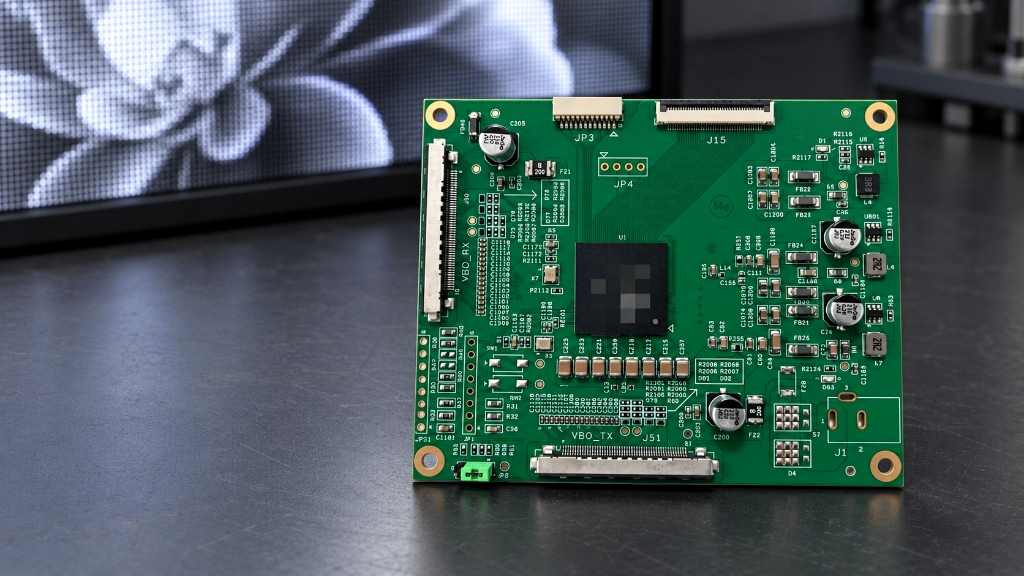
- Video Interfaces eDP · V-by-One · LVDS · MIPI-DSI
- Zone Scaling Hundreds to 10,000+ zones
- Image Processing Real-time FPGA local dimming
- Backlight Control SPI · RZC · project-specific links
A Configurable Local Dimming Platform
The platform is designed for MiniLED display programs that require close coordination between video timing, image analysis, backlight control and panel behavior.
Rather than treating the backlight as an independent subsystem, the architecture aligns panel timing, luminance statistics, zone mapping, driver communication and power limits within one synchronized processing path.
Hardware and FPGA configurations are adapted to the target interface, resolution, zone topology, driver IC architecture and optical stack.
- Platform type
- FPGA-based MiniLED local dimming controller
- Validated path
- 4K @ 60 Hz
- Video variants
- eDP, V-by-One, LVDS, MIPI-DSI
- Zone scalability
- Hundreds to 10,000+
- Backlight links
- SPI, RZC and project-specific interfaces
- Engineering scope
- Hardware, FPGA, driver integration, panel tuning
Platform Architecture
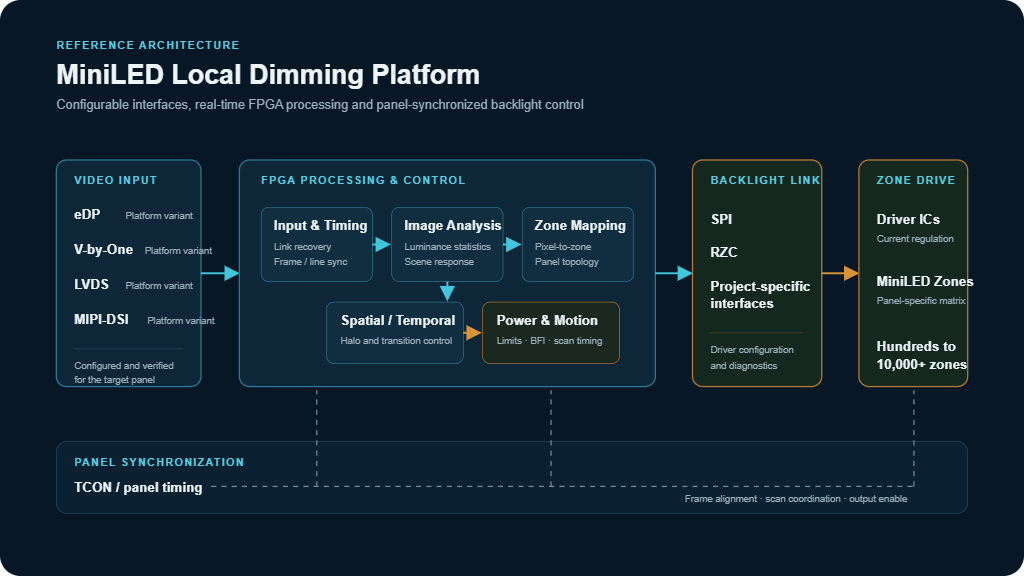
A modular processing path allows the video interface, FPGA resources, zone topology and backlight communication to be configured around the target display.
Interface and Platform Variants
Configurable platform variants support eDP, V-by-One, LVDS and MIPI-DSI video paths. Interface configuration and validation are completed according to the target panel and system architecture.
Available combinations depend on the selected FPGA, panel timing, bandwidth, connector definition and system architecture.
Local Dimming Processing
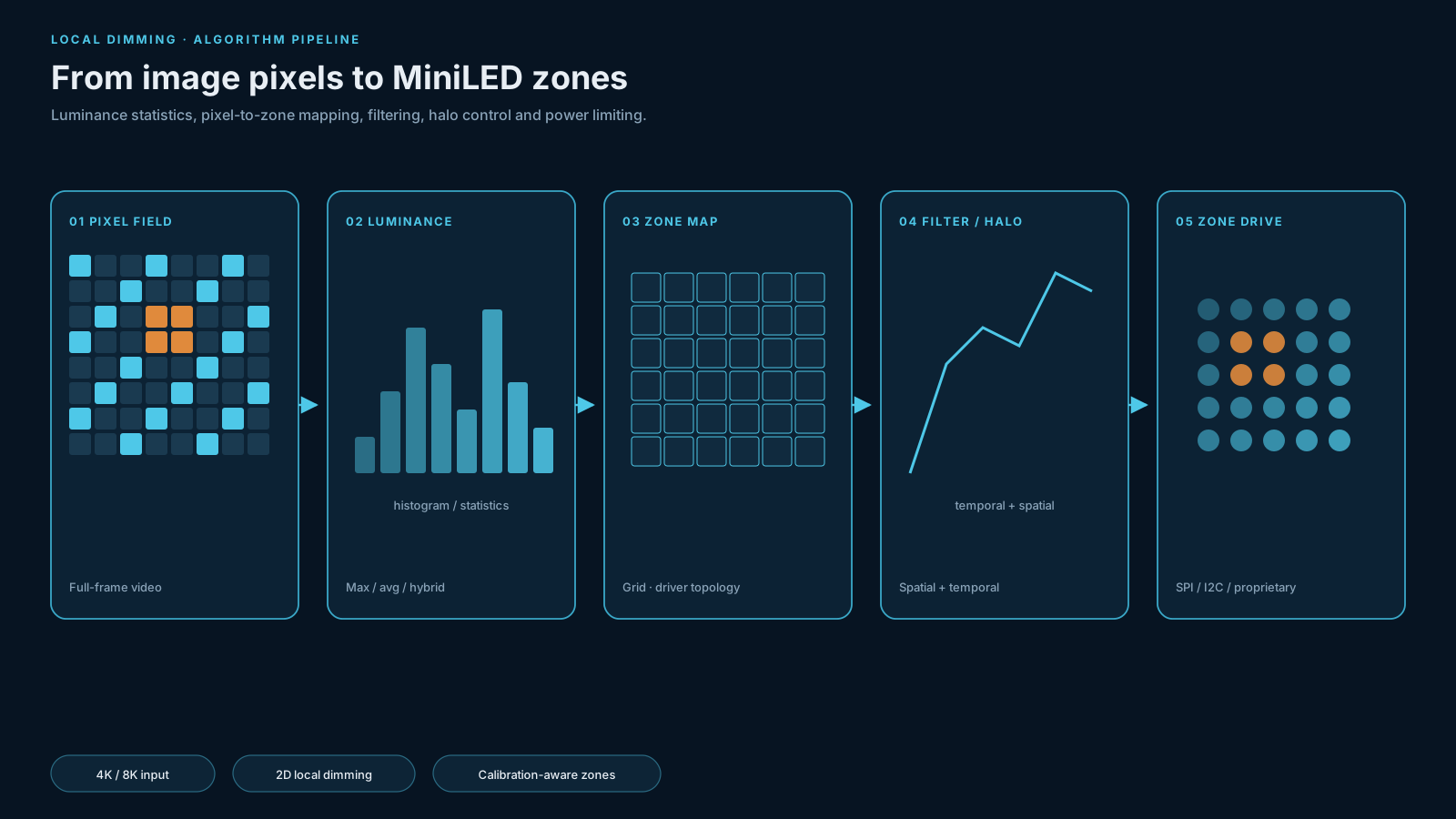
The FPGA processing path converts incoming image content into synchronized zone-level backlight control. Luminance analysis, zone mapping, spatial and temporal filtering, and power-aware output control are tuned together for the target panel and optical system.
- Luminance Analysis
Frame and regional statistics for backlight demand estimation.
- Pixel-to-Zone Mapping
Conversion of image content to the physical MiniLED zone topology.
- Spatial & Temporal Control
Halo management, transition response and frame-to-frame stability.
- Power-Aware Control
Backlight output coordinated with current, thermal and panel constraints.
Engineering Scope
Interface, resolution, refresh rate, zone topology, driver architecture and power targets.
Controller hardware, FPGA processing pipeline, timing control and backlight communication.
Driver communication, zone mapping, current configuration, protection settings and synchronization with the FPGA control path.
Panel bring-up, optical tuning, motion evaluation and production-oriented support.
Engineering experience includes selected driver solutions from 华源智信、芯格诺 and 明微.
Component selection is project-specific. Supplier names indicate engineering experience, not an authorized commercial relationship.
Deliverables
- System and interface definition
- Controller hardware design files
- FPGA processing and control implementation
- Driver IC integration
- Panel bring-up and tuning records
- Prototype and validation support
- Production-transfer documentation as agreed
Detailed implementation parameters and customer-specific engineering data are managed within the agreed project scope.
Developing a MiniLED Display Platform?
Share the target panel, video interface, resolution, refresh rate, zone count and driver architecture. We can evaluate the processing path, controller hardware and validation scope.