
Selected Engineering Projects
A selection of engineering projects across FPGA video processing, display and backlight control, and power electronics. Each brings together system architecture, hardware implementation and application-specific integration.
01
Power Architecture for AI Compute Systems
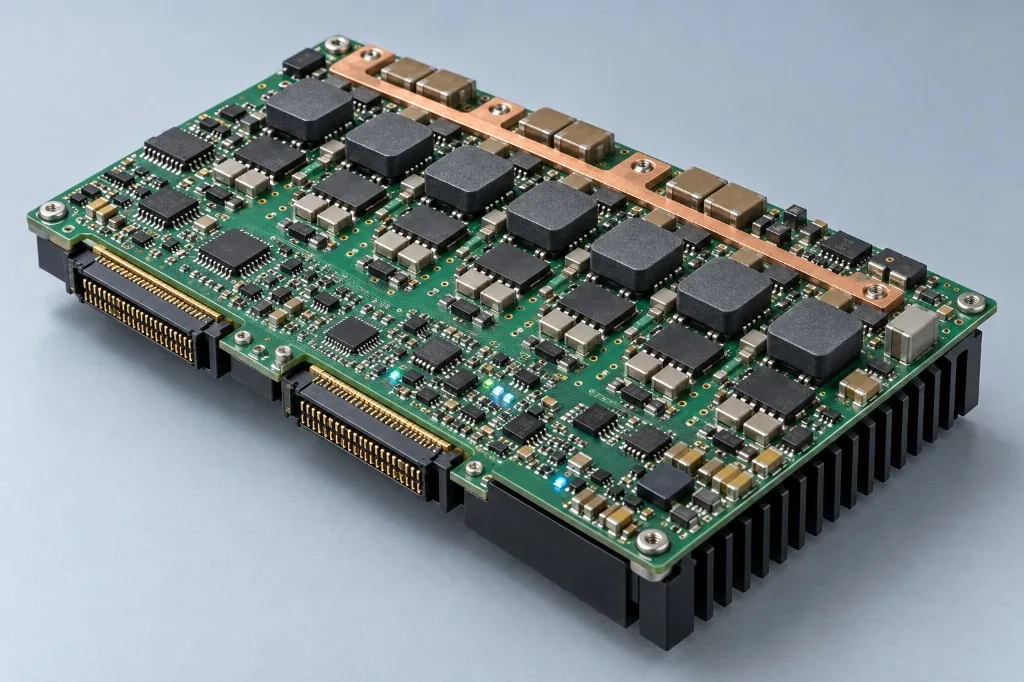
This program focuses on power architecture development for AI compute platforms, from intermediate distribution rails to point-of-load regulation. The engineering scope connects rail planning and conversion-stage selection with sequencing, protection and monitoring. Architecture choices are evaluated against load requirements, current distribution, thermal constraints and board integration, providing a structured basis for subsequent circuit and prototype development.
-
Distribution & Conversion Planning
Define the relationship between upstream supplies, intermediate rails and point-of-load regulation, with attention to power budgets and the operating requirements of each load.
-
Regulation, Protection & Monitoring
Evaluate control requirements, startup sequencing and fault handling, together with voltage, current and temperature monitoring needs.
-
Board & Thermal Integration
Consider high-current paths, component placement, interconnection and heat removal when translating the power architecture into a practical board-level design.
02
FPGA Video Processing for High-Resolution Displays
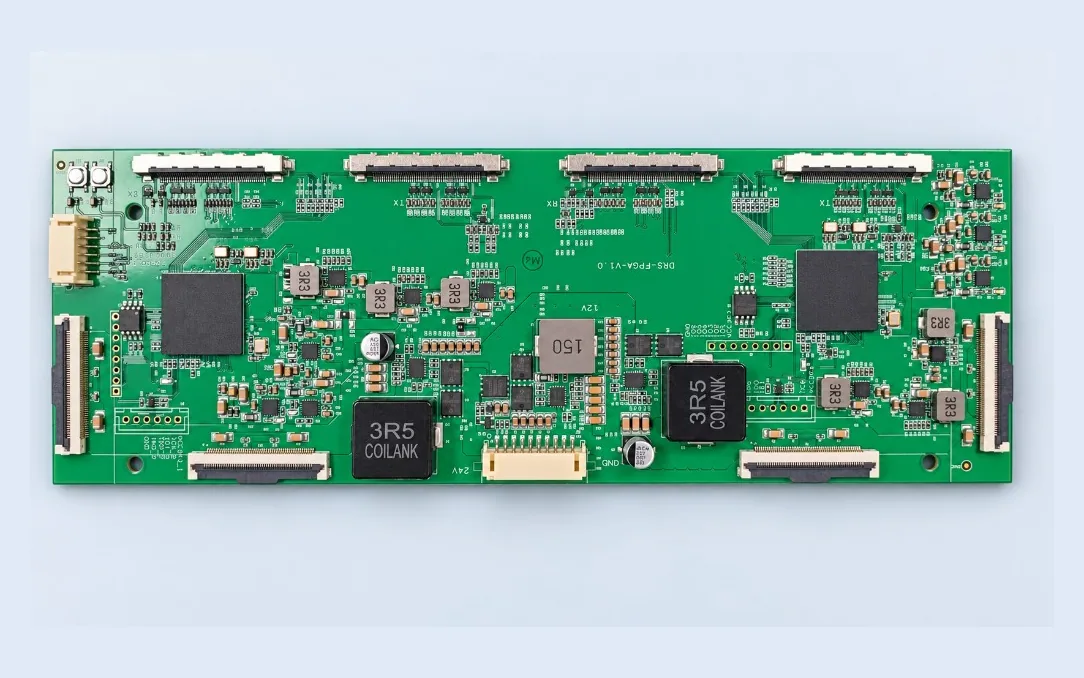
This engineering program addresses the video path between a source controller and a high-resolution display using a dual-FPGA architecture. The design brings together multiple video links, parallel processing and panel timing within a coordinated system. Engineering priorities include throughput allocation, clock-domain handling and synchronization across processing paths, with buffering and interface behavior considered alongside the intended image-processing functions.
-
Multi-Link Video Architecture
Partition incoming and outgoing video streams across FPGA resources, defining interface boundaries, data distribution and the relationship between parallel processing paths.
-
Clocking & Frame Coordination
Address receive and transmit clock relationships, clock-domain crossings and frame alignment, with particular attention to interactions between independently operating links.
-
Processing & System Integration
Organize streaming logic and buffering around pixel throughput and latency requirements, and investigate link behavior during source-to-panel integration.
03
Industrial Display & Controller Integration
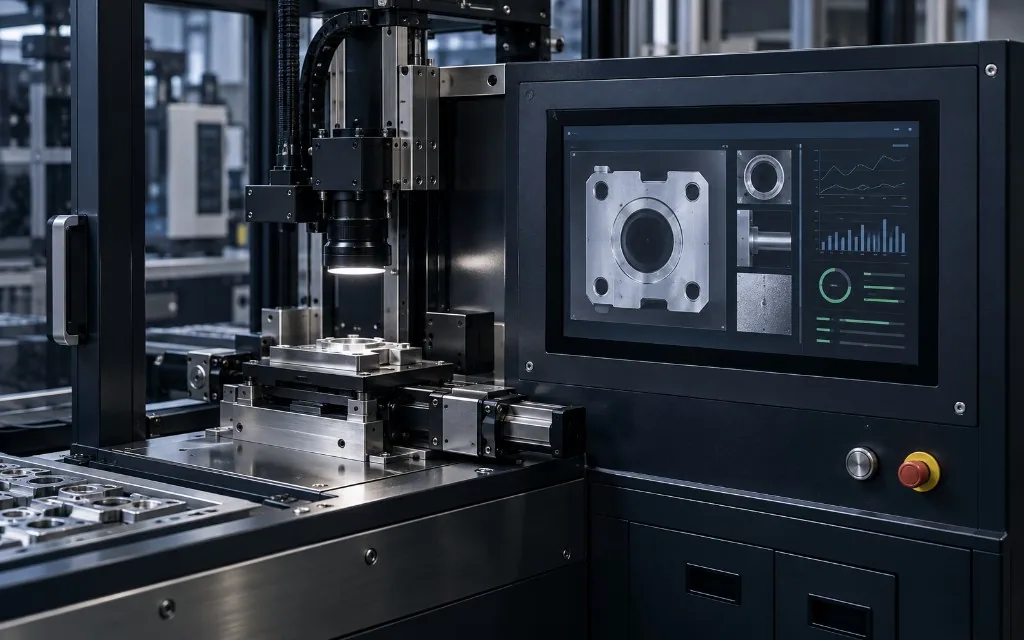
This project brings the display panel, controller and backlight electronics into a coordinated hardware design for industrial equipment. The integration scope covers video interfaces, panel power, control signals and the physical relationship between boards and the display assembly. Design decisions are guided by the selected panel, installation constraints and operating environment, with practical attention to startup behavior, interconnection and serviceability.
-
Panel & Controller Matching
Align video formats, interface requirements and timing parameters between the source, controller and selected panel.
-
Power Sequencing & Backlight Control
Coordinate panel supply rails, enable signals and brightness control so that display startup, shutdown and normal operation follow the intended sequence.
-
Hardware Integration & Bring-Up
Develop board interconnections and mechanical interfaces, then check power, signals and display behavior during assembly-level integration.
04
HUD Image Warping & Binocular Composition
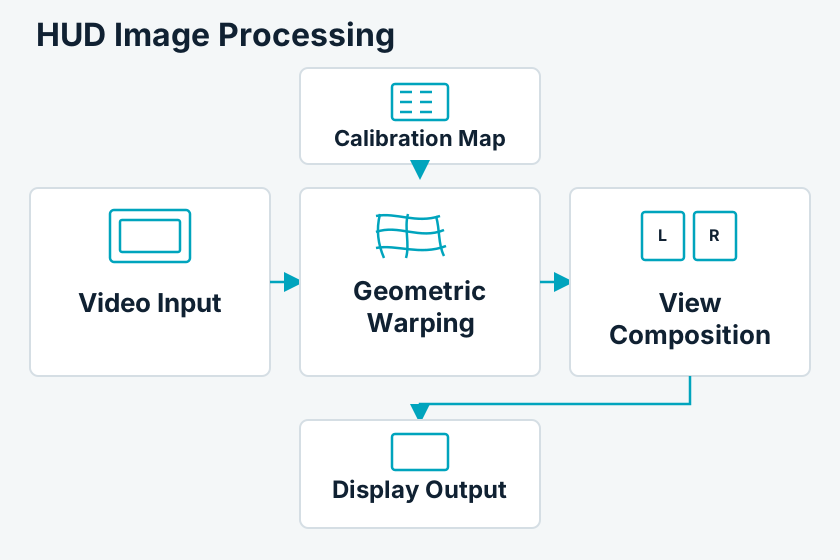
This program focuses on FPGA-based image processing for HUD display architectures that require geometric correction and coordinated left/right imagery. The processing path connects incoming video, calibration data and output timing within a defined resource and latency budget. Engineering work centers on coordinate mapping, pixel resampling and view composition, with the implementation shaped by the optical arrangement and display interface.
-
Geometric Mapping & Resampling
Translate calibration-defined coordinate maps into image-warping operations, considering interpolation, image boundaries and memory access requirements.
-
Left/Right View Composition
Arrange and coordinate the required view content for the display path according to the optical and system architecture.
-
Pipeline & Output Timing
Plan processing stages, buffering and interface timing against the target latency budget and available FPGA resources.
05
MiniLED Local Dimming Control
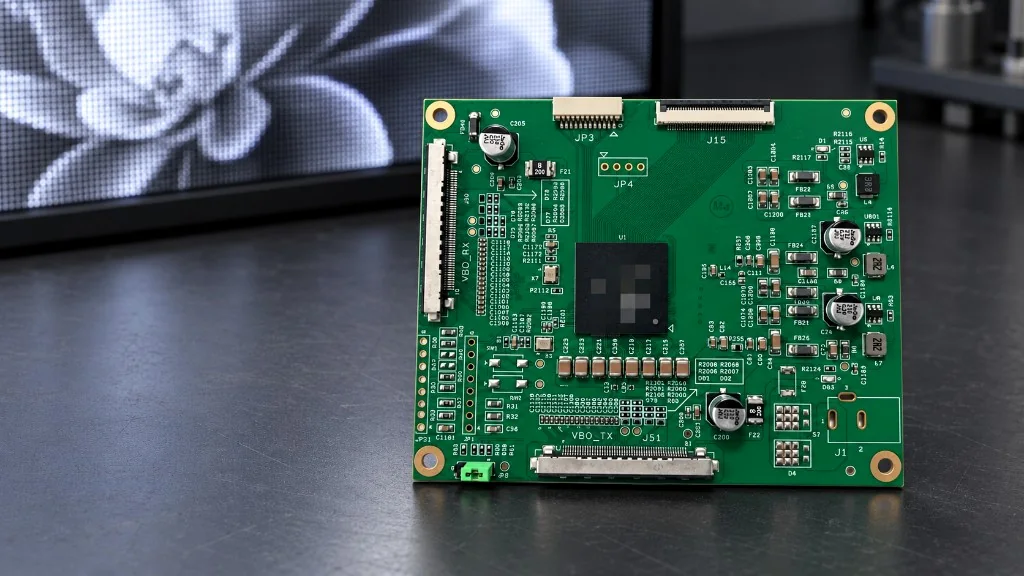
This project connects image-derived brightness information with a zoned LED backlight. The controller translates pixel data into backlight-zone commands and coordinates their delivery with display timing. The engineering scope brings together luminance analysis, zone mapping, brightness control and driver communication, while considering how backlight behavior interacts with the displayed image.
-
Pixel-to-Zone Processing
Map the incoming pixel stream to the backlight geometry and derive zone-level luminance information for the dimming pipeline.
-
Backlight Control & Driver Interfaces
Convert processed zone values into brightness commands and organize communication with the selected LED drivers, accounting for update timing and control resolution.
-
Display & Backlight Coordination
Coordinate backlight updates with panel operation and evaluate brightness transitions, flicker behavior and image consistency during system tuning.
Discuss Your Engineering Project
Share your application, interfaces and performance targets. We can help define the engineering scope and the next steps for development.